Excursions avatar

Review

I finished reading Rework by Jason Fried today 📚

I loved the simple, usually apparent suggestions. Most go against the proven and often advised business best practices. I love the bold ideas and the no-nonsense way the suggestions are delivered through simple short chapters. But, I am afraid I will not be able to benefit from most of them. Jason targets folks like him who are in positions of decision-making regarding how their businesses are run. Not many are in that position. So, as much as I would love my organization to follow even a few of Jason’s suggestions, I am afraid I cannot influence that.

That said, though, I will keep the book close so that I refer back to the clarity of thinking that Jason has lived his business career with. I hope it comes in handy someday.

I finished reading: The Obstacle is the Way: The Ancient Art of Turning Adversity to Advantage by Holiday Ryan today 📚

Laced with real-life examples and a corresponding lesson in each chapter, Ryan Holiday presents valuable insight into handling obstacles. Nicely structured in three sensible parts – perception, action and will – this is a good, practical guide to staying balanced without getting bogged down by roadblocks and failures in life. Ryan doesn’t want to make this a guide for stoic philosophy. Instead, he sprinkles the best of the lessons throughout the book. That helps keep things simple, which most books on Stoicism fail to do.

As he mentions towards the end, many people he tells the tale of “embodied the best practices of Stoicism without even knowing it”. Ryan recommends that just doing matters more. For his intention to not complicate the philosophy, he deserves credit.

I finished reading Think Again by Adam Grant today 📚

Though the book is in no way short, I thoroughly enjoyed it. Grant presents numerous ideas across sections and chapters – some focused on individuals, others on teams. Some on one’s personal life, others on the professional one. Given the recent trend of expanding trivial ideas into a book, I admire the depth Grant attempts with this book.

Sure, not everything works for me. Not all suggestions are practical. A few chapters and their conclusions contradict the more significant point being made. Some sections just have no relation to the central premise of thinking again. The conclusion sounds weakest as if it was added after the thought (something that Grant acknowledges in the Epilogue).

As I struggle today with forming opinions amidst the information overload, this was an essential read. Every help I get to think better is welcome.

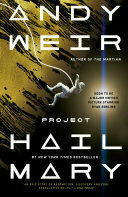
I can’t remember the last time I enjoyed listening to a book as much as I did Project Hail Mary by Andy Weir. Of course, Weir deserves a lot of credit for writing such a smart book. But I am equally impressed by the performance, the voice acting by Ray Porter. I have rarely listened to an audiobook where I can’t separate the narrator and the central character in the book. Most of the folks read the book, performing the dialogs by characters differently every now and then. That wasn’t the case with Porter — he became the character Ryland Grace. The experience it leaves the listener with is absolutely brilliant. I could ignore many of the faults of the book, the plot because I was completely engrossed by the performance.

Sure, even the book is good. I can’t say the same for the writing. But who cares. There’s an innate charm with the way Weir writes his books. Or the way he structures his plot. There’s a lot of science that’s hard to swallow, at times almost at the verge of being stupid. Yet, it doesn’t come out as lazy to me. And I am not alone to feel so; Brandon Sanderson writes this in his review.

Well, what I love that Andy does is he shows that optimism can be compelling as a narrative. I don’t mind the grimdark movement. I think there’s lots of great books that have come out of it. And I like dystopian science fiction quite a bit. Some of my favorite stories are very depressing dystopian stories, such as Harrison Bergeron. But there is a certain electric-fun to optimism. And Andy Weir writes optimistic science fiction, optimistic hard science fiction, even when terrible things are happening.

I don’t think I can word the way I feel about Weir’s writing any better. He did that successfully with Martian. And he outdoes himself by being even more audacious with Project Hail Mary.

The book gets four star from me. And an added star just for Roy. No surprise, it’s rated (almost) five star on Audible. Absolutely brilliant!

Finished reading: Project Hail Mary: A Novel by Andy Weir 📚

I finished reading Death in the Clouds by Agatha Christie today. I didn’t enjoy this Poirot adventure as I did his earlier ones. Sure, the plot, the mystery is interesting. But the way the story unfolds leaves me wanting for a lot more. It’s not a satisfying conclusion — too farfetched. Rushed. Maybe, I am done reading all the good Christie novels. 📚

I finished reading Four Thousand Weeks, a philosophical guide by Burkeman about time. This one is the best time management book that preaches one should not fret too much about managing time. Live life being aware of its finitude. Doesn’t matter how much we try, we can never master time. It reminds you throughout the book that you don’t have time, but time is what you are.

Just like Burkeman did with his previous book, The Antidote, he left with so many profound observations and thoughts. This is not a practical guide of hacks that you could try to follow to improve your life. Rather, it lends an opportunity to reflect on at least a couple of ways you perceive the concept of time, and consequently, lead your life.

I finished reading Einstein’s Dreams by Alan Lightman today. This is a wonderful collection of thought experiments around our perception of time. The summary of the book says it’s a collage of stories – but there aren’t stories. With each “story”, the author Alan Lightman instils a fascinating possibility for the concept of time being something uniquely different. What if everyone settles on their view of time? What if it is always in the past? Or always in the future? Or with just a day of life? It’s a thought-provoking list.

All these 30 dreams are poetic vignettes that paint the varied interpretations of time. They evoke emotions through vivid narration of people’s lives in such a world and their surroundings. I paused after each chapter, pondering over the impact existence of such realities could have.

At the surface, sure, these are just fictional stories. But dig deep, and you may be able to draw a parallel with realities of our world. With our perception of time. This is a beautifully written, short but profound read! ⭐️⭐️⭐️⭐️ 📚

I finished listening to Storyworthy by Matthew Dicks and I instantly wanted to purchase the eBook version of the book too. This is one of those few books that are best read as both audio and text version. The audio brings out Matthew’s expertise as a storyteller — you realise how powerful the medium of storytelling is. However, as I had recently complained, it doesn’t give me enough chance to make notes from. Or to go back to those key sections and read them again.

I am not a storyteller by profession. I don’t get on a stage to narrate a story from my life to a group of strangers. Rather, I can’t even do that if I wanted to — the introvert in me shudders even thinking about it. But I do like to tell stories to the people I am comfortable with. To my family, my friends, my colleagues. And what Matthew attempts to narrate in this book is how to do that better.

But it’s not the “how to tell better stories” part that I found helpful. It is how to find those story-worthy moments from your life that had me excited. Matthew has a very natural, effortless way of conveying the methodical ways to identify, prepare and tell your stories easily. You would expect that, he is a teacher first, after all.

At the same time, he is also a writer and a renowned storyteller, though. So, listening to him tell his stories and use them as a tool to teach the process behind was fascinating. He has mastered the art over his many shows, and he lays out everything he has learnt through his experience for his readers to benefit from. He holds back nothing.

I have made so many notes, and I will make a many more when I read this book a second time. One thing, I have got homework for life now. And I don’t complain.

You should read this book even if, like me, you have no intention ever to tell your stories to strangers. Because, as Matthew says, there come moments in our life when we do tell our stories. So, instead of being terrible at it, we can attempt to do slightly better. Maybe we will not bore a few people the next time we ramble along in front of them. A must-read for me. ⭐️⭐️⭐️⭐️⭐️

I don’t remember the last book before How to Live by Derek Sivers that made me contemplate so many times while reading. The moment I was done with the last page, I had my diary out to capture my understanding from each of the 27 answers to that one principal question, how should I live.

As Derek says in the subtitle of the book, they are all conflicting answers. But the conclusion is not weird at all — for one, Derek is a masterful and a deep thinker. Each short chapter has most knowledge presented in the least number of words possible. Wisdom to words ratio is pretty high with this gem of a book.

At the surface, the book is pretty straightforward to read. Short chapters. Short, easy sentences. But, dig deep, and it is one of the most difficult books to fathom. It will force you to question what you have believed throughout your life, and it’s that questioning that will leave your mind unclouded.

It’s easy to write long, elaborate prose. But it takes time to shorten it, and I am glad Derek took that time. In his words, it took him four years, often writing 16 hours a day, to condense it down from the first draft of 1300 pages to 115.

What results is one of the most powerful and important books ever written. Take time and read it slowly. ⭐️ ⭐️ ⭐️ ⭐️ ⭐️

I finished reading Made to Stick: Why Some Ideas Survive and Others Die by Chip Heath. I wanted to love this book - the premise is brilliant. But it reads like a textbook, and that’s no way to make a message stick with your readers. For that matter, that doesn’t even look to be the author’s intention.

To start with, the book lacks a clear, central idea that every chapter circles back to - it’s all over the place. It digs into the history to find and describe every event, research or anecdote where a difficult message was conveyed effectively. Once it does that, the author summaries his understanding of why that worked.

First, the author nonchalantly tells you what the learning is – “Which message do you think works best? Of course, second”. I’m sorry, but let the reader come to that conclusion. Don’t beat him on the head till he gives up and agrees in frustration.

Second, each time the reasons that the message was effectively conveyed in each story are too varied – it references almost every phycological/managerial techniques - Maslow’s hierarchy and five whys and on & on.

Finally, suggestions like be simple/concrete, don’t bury the lead, capture attention etc are easier said that done. They are a set of skill that all understand they should have, but not every person has in equal doses. Please, your suggestion cannot be “become a master public speaker or leader or designer”.

Sigh, it was frustrating to read through this book. Ironically, it fails to follow the message it wishes to convey - talk about one message, be simple and concise. It would have stuck with me then. 📚